Wednesday, May 2, 2012

Week 6 Tasks

3 sources on aspects of design:

Advances in Architectural Geometry, Ceccato.Hesselgren, SpringerWienNewYork, 2010.
    Abstract: This book illustrates the newest geometries in modern architectures and     apart from concentrate on geometry, it also demons some fo the advances and differences of those geometries in 3D applications.

Surface Architecture, David Leatherbarrow & Mohsen Mostafavi, Achorn Graphic Services Inc., 2001
    Abstract: This book presents the basic concepts and design methods of surface architectures and concentrates on the geometries and formal devices of surface architectures. To demonstrate it more detailly, several case studies of exist surface buildings are included with a detailed analysing.

Yongda Ying (2007), The Study on Geometry in Architecture, Tongji University Press.
    Abstract: This source is found in a Chinese database which is focusing on the research of architectural designs and geomeries. And in this article, geometries are more detailed divided and by analysing each type of shape, author gives us plenty of existing architectures to demonstrate the applications of that particular geometry.


3 sources on technical aspect of complex geometry:

Arne Riekstins(2009), Parametric Approach in Designing Large-Scale Urban Architectural Objects, Lietuvos Ateitis Press.
    Abstract: This article focusing on how to create large scale urban architectural objects by using parametric tools. Instead of design smooth and fluent surface, this article concentrating on more detailed and complicated structures. Random isolated components can be seen every where in this article.

Computer Aided Architectural Design, Bob Martens & Andre Brown, Springer, 2005.
    Abstract: This book concentrate more on the theories of how architectures can be created by using computer. Instead of teaching people how to acheive it, it tells more about the history, the origins and script of computer languages.

Twist & Build, Karel Vollers, Rotterdam, 2001.
    Abstract: This book teaches readers how to create twist buildings by using CAD. It doesn't relate to parametric design a lot which is useless but can be a reference as how to break a building into several detailed component and the progress of how to start create those component and combine them together.

3 images of architectures:

This is the Mikimoto Ginza which locates in Tokyo, Japan and designed by Toyo Ito.
Toyo Ito is one of the representatives of modern architects that is pretty dote on parametric applications. This building affect me a lot in both appearance and geometries on the wall.

This is the Abu Dhabi Performing Art Centre in United Arab Emirates designed by Zaha Hadid. The smooth appearance of her architecture is unique and that the form I persue in my design which might be used in assignment 3.
Louvre pyramid locates in Paris, France and designed by I.M. Pei. Although this building is not created by parametric tools, its still a good example of thinking architectures in digital way.

Wednesday, March 28, 2012

ASSIGNEMNT1 SUBMISSION

Interactive PDF
Grass hopper flowgraph
 1. The above image is the flowgraph for shell branch.
 

 2. The image above is the flowgraph for twisted branching structure.


3. This flowgraph is for voronoi geometry.

Wednesday, March 21, 2012

FOR WEEK 4

 
This is just a simple layout of my poster. My title will be in the left top corner and at the bottom will be a background image which is a rendered image of mine. On the right side, will be 12 rendered images about 3 different design in grasshoper.

WEEK 3 TASKS

12 quick rendered images

FOR WEEK 3

DEEP RESEARCH ON BRANCHING SYSTEM

http://www.opensysdesign.com/2007/09/b.html
This is a website I found can be useful to help people understand branching system. Branching system is an open system in which a system continuously interacts with its environment. It may be defined an entity with inputs that changes its behavior in response to conditions outside its boundaries. It may be defined as the region of space characterized by a collection of components or elements related in some way.

A Geometric Comparison of Branching Structures in Tension and in Compression versus Minimal Paths ,Von Buelow, Peter,International Association for Shell and Spatial Structures.
This is a book I found on teh internet, and it illustrates braching system in various ways. Branching structures are based on geometric systems that expand through bifurcation without returning to form closed cells. In this sense, branching structures resemble the structure of trees that branch continually outward. In architectural engineering, these forms can be used either as tension or compression systems. Form finding techniques based on models have been used in the past to study these forms. Although thread models can be effective in the study of force paths, they cannot distinguish between tension and compression and have no way to take member buckling into account. But buckling does have an influence on appropriate geometry of a compression system. Also, minimal paths have been used to explore possible geometries for branching structures. Both surface tension thread models dipped in water, and weighted string models are shown in comparison with ideal tension and compression forms found with a computational method based on Genetic Algorithms.

5 EXTRA IMAGES OF BRANCHING

 This is an system image of human's lung. As can be seen from here, even organs can gave a sense of aesthetic and in special geometry system. The direction of blood capillary is totally opposite from tree braching. But this irregular branching method increase the aesthetic perception of lung system.

This is a leave of a palm tree. Compared to lung capillary, this konf of structrue is more regular and neat. Every branch is in the same position and same lengths and thickness.
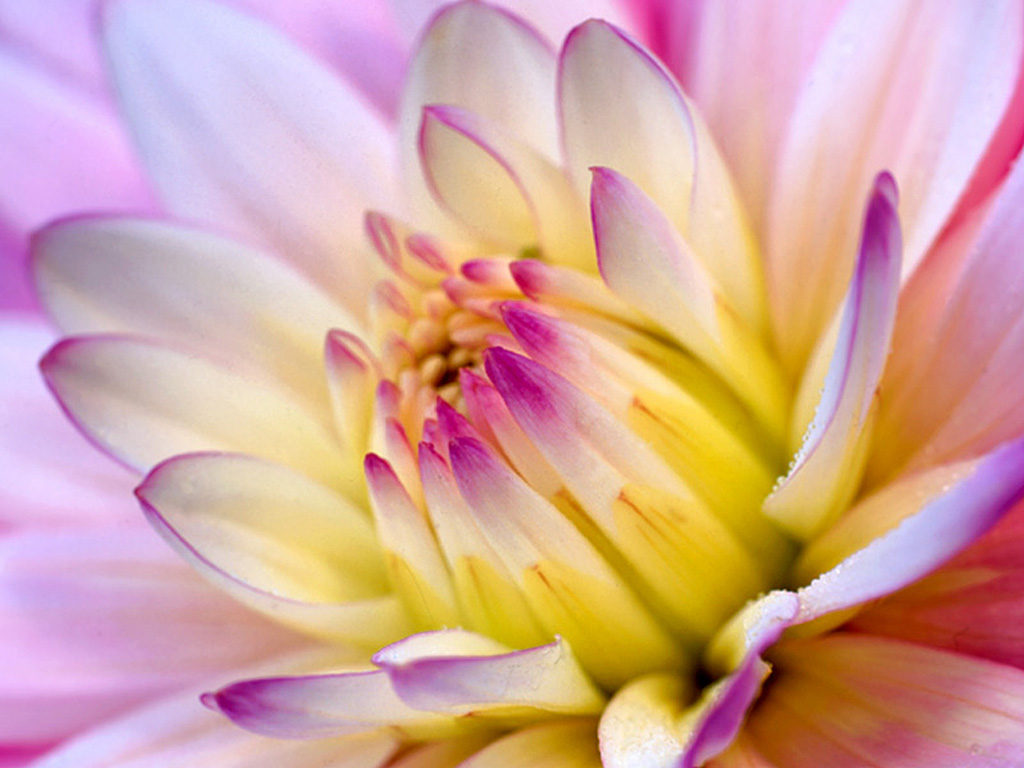
Flower is another type of branching structure. Every petal come out from a same trunk and in each level, the size as well as the thichness of the petals are different.
 Coral prefers to be a natural branching structure which grow slowly and elegent.
 This is somebody's OS branching structure which is an exeggeration of leave brancing.

TUTORIALS FROM DISCUSSION FORUM

http://www.youtube.com/watch?v=pLd4-T-l2WM
This tutorial is to teaching people use voronoi to create a hollow plan with relative thickness and its helpful to me.

http://www.nomads.usp.br/documentos/eventos/rhinograsshopper/Generative%20Algorithms_CaE_Weaving.pdf
This is a tutorial on generative algorithms focusing on creating weaving style models (like textiles and fabrics) in grasshopper.

WEEK2 TASKS

 SELECTED THEME-BRANCHING STRUCTURE

The theme I chose to develop is the branching structure. In terms of the three images I selected, although they are in different natural system, they keep the same or in other words, similar braching systems. Have a closely look at teh tree braches and crystal micro structure as well as teh water waving. They are all diverge from a main objects. Tree branches are diverge from trunk, crystals are diverge from main structure which can also be seen from molecular formular. Even the waving system diverges from the water. Thus branching system is the most changeful system that can have thousands of different geometries and almost all of them are in a aesthetic sense.

SKETCH DRAWINGS
 This is a branching pilotis structure which is in a form of pavillion.
 This is an office building that full of trusses and hollows.
This is a structure that at the outside is a trusses system and inside is a regular box.

 VEDIO RESOURCES THAT USEFUL TO MY THEME
This tutorial is to teach you how to create a voronoi box in grasshopper. It's extremely useful to create teh third sketch above. For that kind of structure, you can use this tutorial or the truss tutorial on the blackboard.

Wednesday, March 7, 2012

WEEK1 3 DIFFERENT SYSTEMS

The first image I'm intersted in is the branching system of trees. Trees are incredibally awesome natural creatures which are not only because of their functions but also their structures. Different trees have totally different branching systems and the main structure that the main brach in the bottom and thiner branches spread out to increase the scale is absolutly beautiful.

 The second image I chose to post is the structure system of a kind fo crystal under microscope. It's seems similar to branching systems however they are actually seperated. Branching system of a tree prefer to increase scales by the sub branches. Instead, system of crystal is more like weaving a huge net to make it stable and full of aesthetic perception.

The last image makes me concern is the waving system of a water drop. Unlike the previous two systems, waving of a water drop is elegant and regular. Every wave is make of circle and various circles combine together to form an exceptinal concave convex system which is amazing.